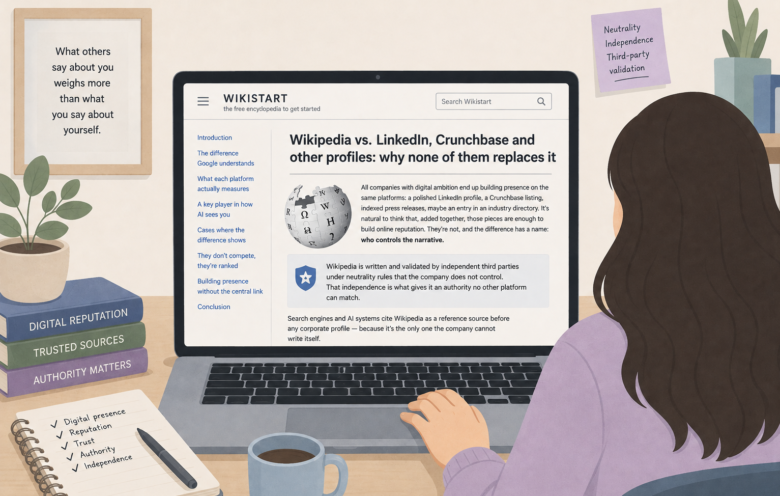
Wikipedia is both the world’s most trusted encyclopedia and a space where the meaning of events is shaped in real time —a living record built through the constant interplay of openness, accuracy, and perspective
When Wikipedia went live in 2001, its founders Jimmy Wales and Larry Sanger imagined a vast, open encyclopedia that anyone could edit. Within a year, Sanger —a philosopher and editor from the United States— had left, disillusioned. He had wanted a more structured system, one guided by subject-matter experts. Wales and much of the growing community preferred the opposite: a free-flowing, decentralized platform where no credentials were required to shape the record.
That tension —between openness and rigor— has never really gone away. How do you let anyone, anywhere, make changes to an article while still ensuring accuracy? How do you guard against bias without betraying the site’s freewheeling ethos?
More than two decades later, Wikipedia is one of the most visited sites in the world, attracting over 15.5 billion unique visits each month. For journalists, researchers and casual readers alike, it is often the first stop when seeking information on a person, institution or event. But the same conflict that drove Sanger away still animates its pages: a constant Edit warring between inclusivity and precision, played out by an unlikely alliance of human volunteers and automated bots.
On Wikipedia’s most contested entries, the battles can be relentless: edit wars, reversions, automated interventions, semi-protected pages, blocked accounts. Anonymous edits —made without registering or logging in— add another layer of trouble, frequently aiming to manipulate or vandalize content. Edits that fail to meet the site’s standards are usually erased within minutes.
The most delicate fights, however, often involve conflicts of interest —where both sides meet the technical requirements, but their choices drip with bias. On the page for former Argentine president Cristina Fernández de Kirchner, one user accused another of deliberately selecting a recent photo meant to ridicule her, arguing for an image from her most prominent years in office. The other replied that Fernández de Kirchner remains a central figure in Argentine politics and deserves a current portrait.
On the page for President Javier Milei, editors have sparred over whether to include his nicknames, which are cited in reputable publications but, some argue, erode neutrality. Similar disputes have erupted over entries for Donald Trump, Nicolás Maduro and Benjamin Netanyahu —evidence that the struggle over “truth” transcends geography, language and ideology.
Wikipedia is, at its core, far more than an encyclopedia. It is a cultural battlefield, where the record of our times is rewritten in real time —a quiet, unending contest to decide not just what information survives, but whose version of reality prevails.